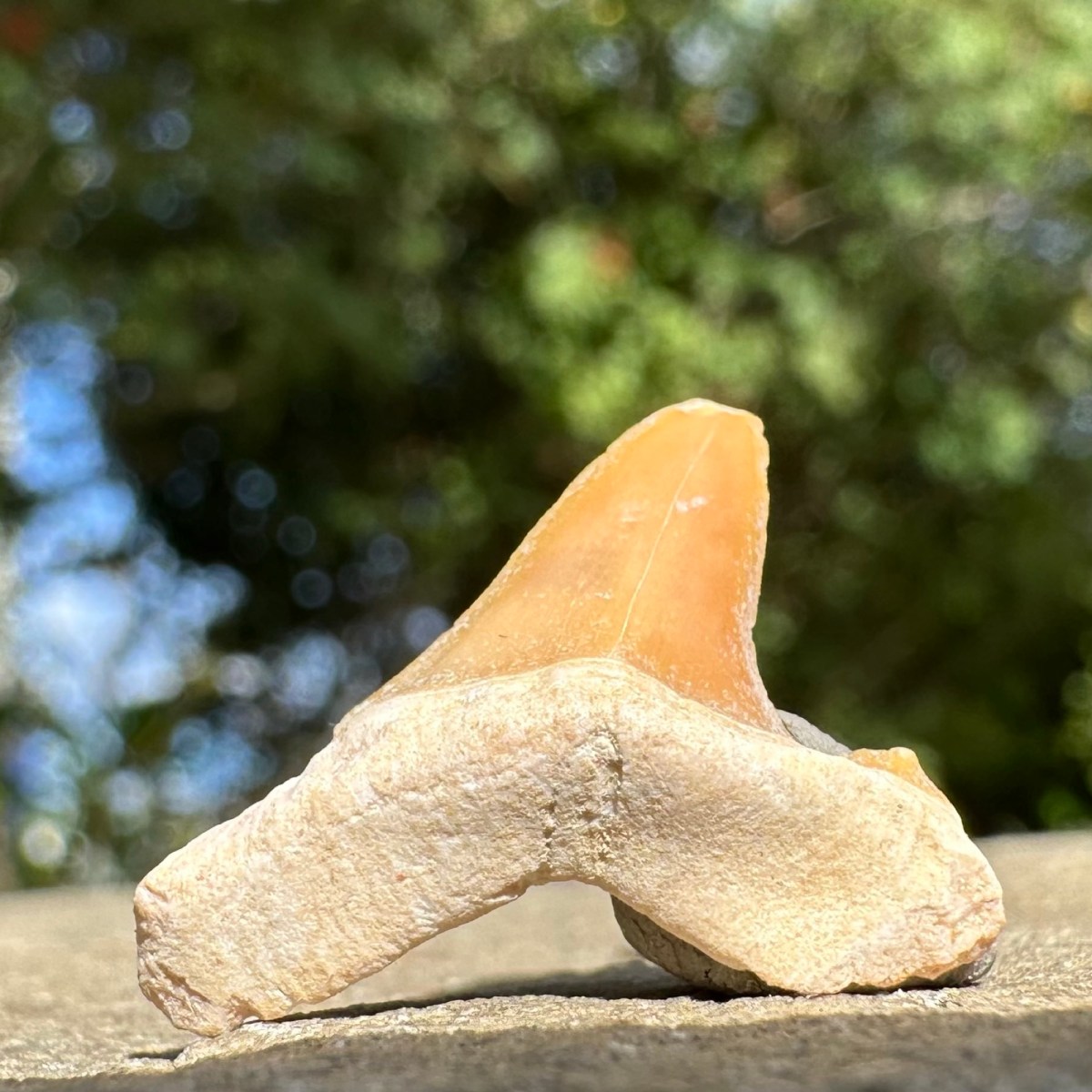

Description Authentic Shark Tooth Fossil from Morocco This listing is for a genuine fossilised shark tooth carefully sourced from the world-famous phosphate deposits of Oued Zem, near Khouribga, Morocco. Dating back to the Eocene epoch (approx. 56–34 million years ago), these teeth are preserved specimens from an ancient marine ecosystem that once thrived when North Africa was covered by a shallow tropical sea. Each tooth measures between 10–30mm, with the accompanying photographs showing an example of the actual type of specimen you will receive. A 1cm scale cube is included in the images for accurate sizing reference. Geological Origin: Oued Zem Phosphate Deposits The Khouribga Basin in central Morocco is one of the richest phosphate deposits in the world and has produced countless vertebrate fossils of exceptional scientific value. During the Eocene, this region was characterised by warm, nutrient-rich waters, creating the ideal conditions for diverse marine life including rays, bony fish, and numerous species of sharks. Phosphate-rich sediments contributed to the excellent fossilisation process, mineralising the teeth and ensuring their preservation across millions of years. Species and Morphology The Moroccan phosphate beds contain a wide range of shark species, including members of the orders Lamniformes and Carcharhiniformes. Teeth from these sharks often exhibit distinct triangular crowns with fine serrations, designed for efficiently slicing through prey. Others may display elongated, needle-like cusps suited for grasping slippery fish. The specimens offered here showcase typical features of Eocene shark dentition, including sharp cutting edges, robust enamel, and root structures that demonstrate the remarkable adaptability of ancient sharks to their environment. Scientific and Collecting Value Shark teeth from the Eocene are significant not only for collectors but also for scientific study. They provide insights into the evolution of modern shark families, including the lineage that eventually led to iconic species such as the Great White. These Moroccan specimens highlight the biodiversity of early Cenozoic oceans and are often used in comparative studies of tooth morphology, palaeoecology, and evolutionary trends within the Elasmobranchii (sharks and rays). Depositional Environment and Fossilisation The Eocene seas of Morocco represented a shallow marine platform environment where sedimentation rates were high, and organic material accumulated alongside phosphate minerals. This unique depositional setting facilitated the replacement and preservation of biological material, leaving behind durable enamel and dentine. The result is a fossil tooth with strong mineral composition, a natural gloss on the enamel, and sharp edges that have survived tens of millions of years. A Perfect Collectible or Gift Whether you are an avid fossil collector, a geology enthusiast, or someone looking for a unique natural history gift, this shark tooth fossil is an exceptional choice. Each specimen is a genuine piece of Earth’s history and tells a story of life in the Eocene seas. With its compact size (10–30mm), it can be easily displayed in a collection case, framed, or used as an educational piece to teach about palaeontology and the evolution of marine predators. Guarantee of Authenticity All of our fossils are 100% genuine specimens. Each shark tooth fossil comes with a Certificate of Authenticity, providing peace of mind and confirming its provenance from the Oued Zem phosphate deposits in Khouribga, Morocco. The piece you receive will be carefully selected and representative of the high-quality fossils shown in the photographs. This is a unique opportunity to own an authentic fossil from one of the most important Eocene sites in the world—an original shark tooth preserved for over 40 million years, ready to be added to your collection.